
Yakuza Mama Flotilla's Journey to COP30 Demands Action for the Amazon and Indigenous Peoples' Rights
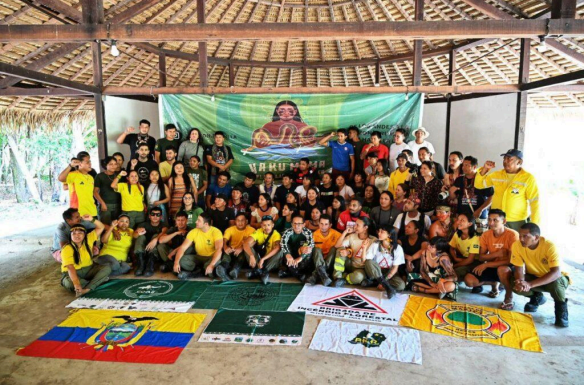
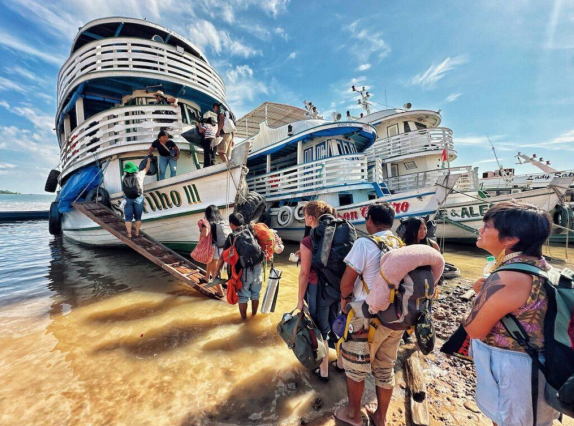
This past fall from October 13 to November 10 2025, The Yaku Mama Flotilla traveled over 1,800 miles from the Andes in Ecuador to Belém, Brazil where the COP30 was held. Earth Rising was proud to provide funding for travel, lodging, food, and materials for the flotilla through Rainforest Foundation US (RFUS), which supported the Yaku Mama Flotilla during its passage through Peru along with Indigenous partner, the Organization of the Indigenous Peoples of the Eastern Amazon (ORPIO).
IMAGES CREDIT: Yaku Mama Amazon Flotilla Collaborative Coverage
This collaboration between RFUS and ORPIO brought participants on the flotilla to communities where they visited community-led sustainable enterprises and learned how community members are using monitoring technology to strengthen territorial defense.
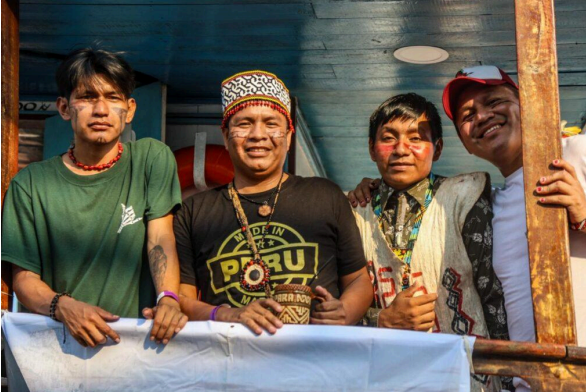
Onboard the flotilla were Indigenous leaders, youth, women, and allies demanding a place at the table for Indigenous perspectives on climate action. Indigenous peoples are key actors shaping the future of our planet. They have managed vast rainforest territories for millennia. These rainforests regulate rainfall, store carbon, and shelter immense biodiversity and sociocultural diversity. In recent years, several studies have provided statistical evidence confirming that lands legally titled to Indigenous peoples are the most effective models for forest protection.
The flotilla engaged Indigenous leaders from Peru, Ecuador, Colombia, and Brazil in community visits, workshops, and public events with the journey centering on knowledge sharing, collaboration and advocacy. It also served as a key communications opportunity, with viral social media engagement highlighting Indigenous peoples’ vital role in protecting the Amazon rainforest and in global climate action.
IMAGES CREDIT: Yaku Mama Amazon Flotilla Collaborative Coverage
The flotilla’s boats displayed the image of Yaku Mama, meaning “Mother Water” in Quechua, a sacred river serpent that symbolizes protection and strength. The route the flotilla took retraced the path taken by Spanish colonizer Francisco de Orellana in 1541. While his expedition marked the beginning of colonization in the region, the flotilla became a journey of Indigenous solidarity and resistance against the continued destruction of the Amazon.
Along the way, the flotilla stopped in Indigenous and local communities to share knowledge and amplify urgent demands including stopping fossil fuel extraction on Indigenous peoples’ lands, ensuring climate funding for Indigenous communities and prioritizing indigenous knowledge in climate policy.
IMAGES CREDIT: Yaku Mama Amazon Flotilla Collaborative Coverage
The Yaku Mama Flotilla arrived in Belém on November 9, the day before COP30 began. Its journey through the rivers and territories of the Amazon served as a strong statement that Indigenous peoples’ are crucial for effective, just climate action.
To learn more about the work that Rainforest Foundation US does visit their website here.